
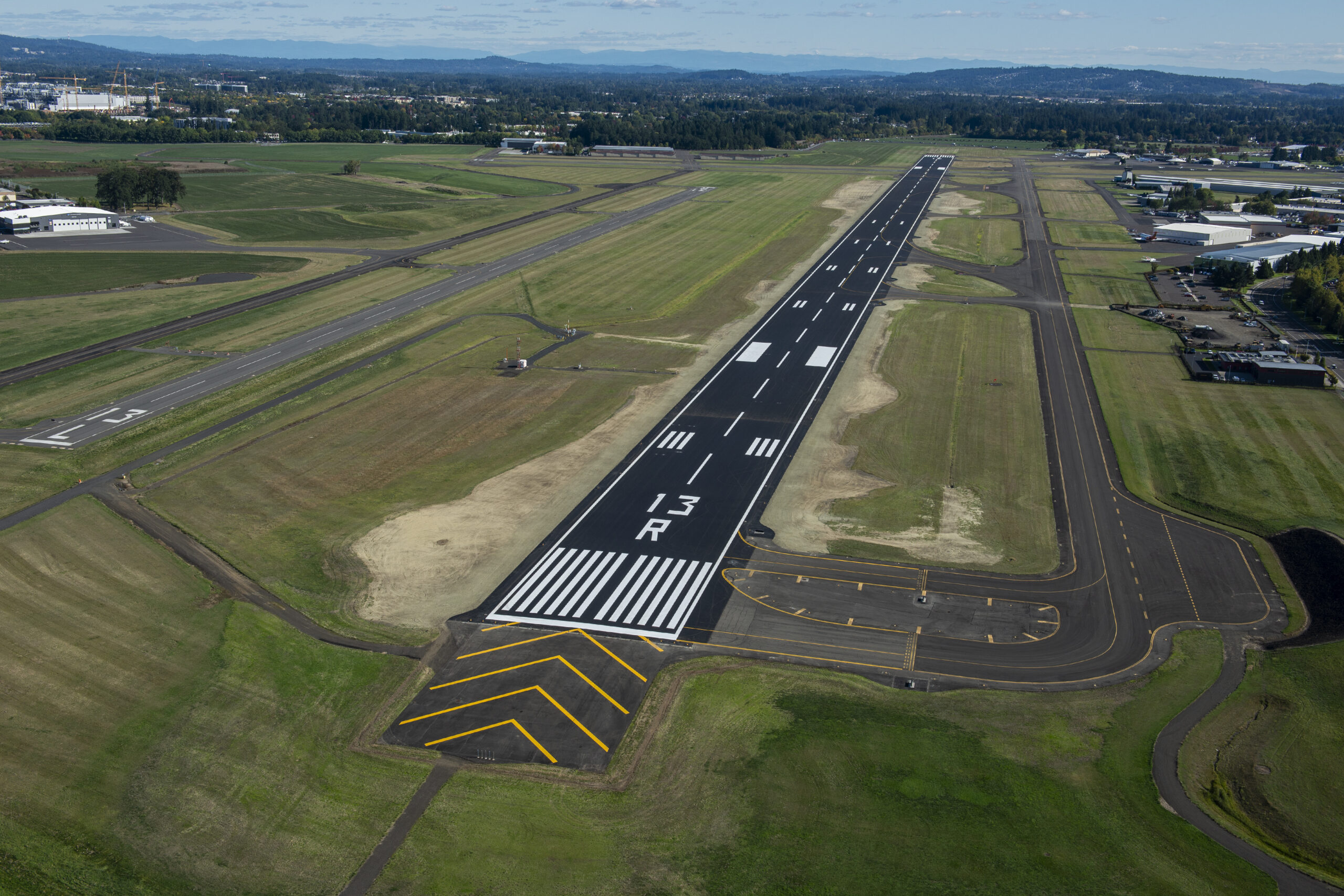
Hillsboro Airport (HIO), Oregon’s second busiest airport, is a vital part of the region’s aviation system. Supporting flight schools, corporate aviation, charter services, and emergency response flights, the airport manages a high level of activity. To ensure safe, uninterrupted operations during construction, the Port of Portland partnered with Century West Engineering (Century West) to resolve drainage issues in the runway safety area (RSA) and maintain environmental compliance with the Runway Safety Area Improvements project.
A Drainage Problem in the Safety Area
Before construction began, the Glencoe Swale (an urban creek) crossed the RSA via an open drainage channel. The channel carried stormwater across the site, but after years of use, it had deteriorated, resulting in frequent standing water. The RSA is meant to remain clear so aircraft can navigate to it in an emergency. Standing water creates multiple issues for an RSA, including attracting wildlife and obstructing vehicles or aircraft. These potential hazards meant that the HIO RSA was unable to meet current Federal Aviation Administration standards.
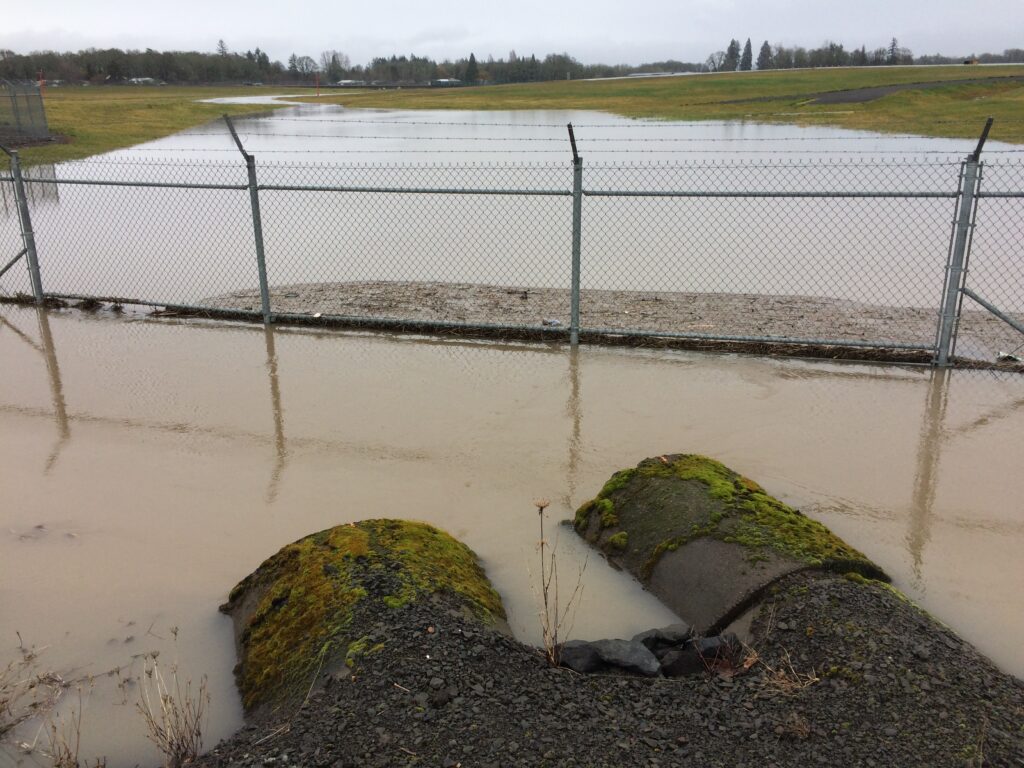
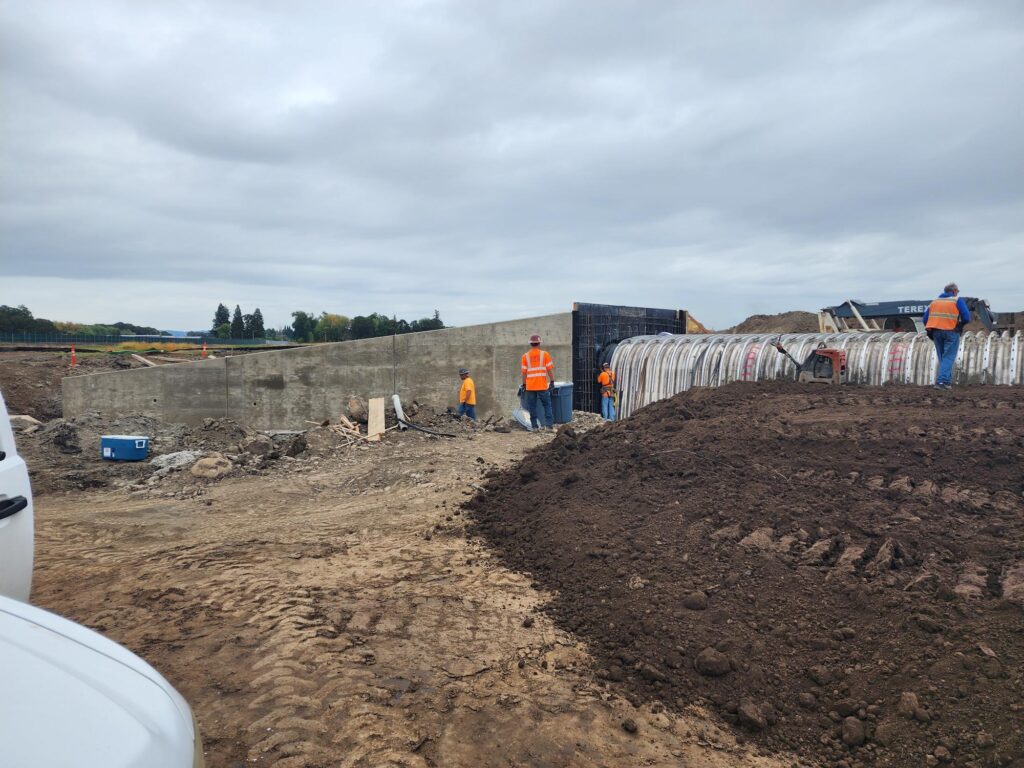
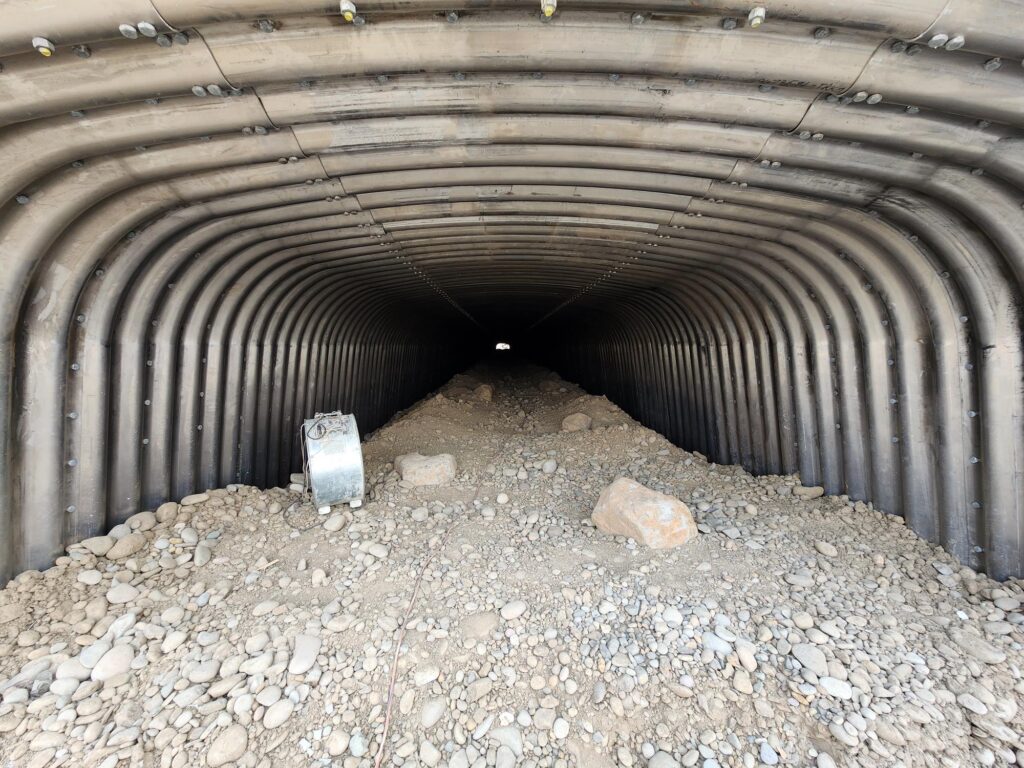
To address these issues, the Port of Portland chose Century West to remove the open channel and find an alternative way for stormwater to flow through the RSA. The solution also needed to preserve the original purpose of the Glencoe Swale, to protect wildlife, meet environmental permitting requirements, and safeguard aquatic habitat. The Port of Portland and the Century West team worked together to develop that solution: a concrete box culvert.
Designing a Practical Solution
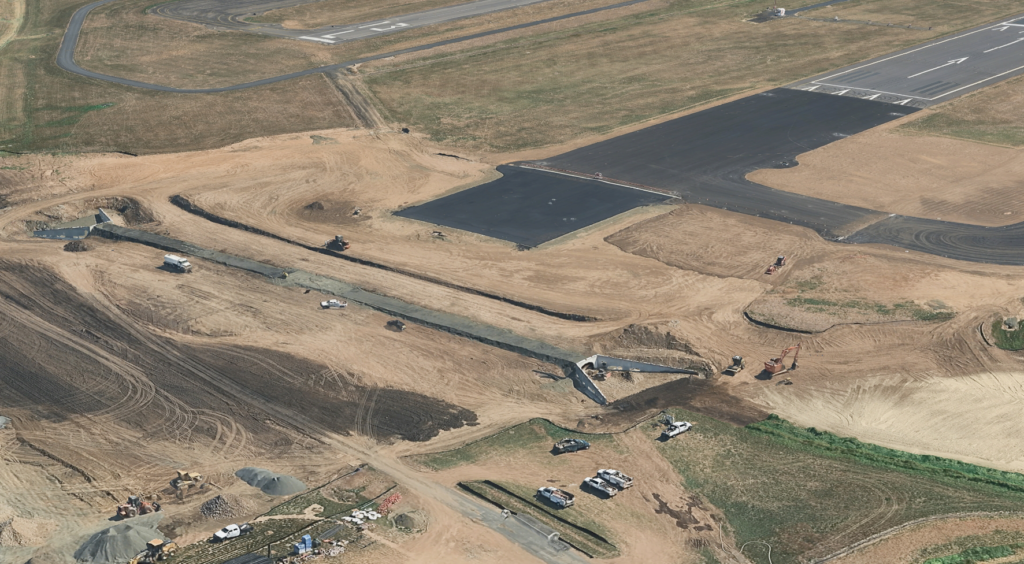
Century West designed the concrete box culvert that now carries flows from the Glencoe Swale beneath the RSA. With the culvert installed, the channel across the surface of the RSA is no longer in use, and the standing water issues have been eliminated. The culvert was designed to allow fish to pass through, which enabled the project to meet requirements from the Oregon Department of Fish and Wildlife while also satisfying Federal Aviation Administration design standards.
The project addressed other safety and drainage issues at the airport. Additional work included grading corrections, removal of Taxiway A2, geometry improvements to Taxiways A and A1, stormwater infrastructure upgrades, and new airfield electrical systems.
Working Around an Active Airport
Because Hillsboro Airport supports many aviation businesses, the team needed to keep the airport functioning during construction. Century West worked closely with the Port of Portland, the contractor, and airport tenants to plan the work in phases.
Most of the construction took place while the runway remained partially open. A full closure was limited to a short period of about two weeks. This approach allowed most airport users to continue operating while the work progressed. Regular coordination meetings helped the team stay aligned and respond to field conditions as they came up.
Environmental Coordination
The project site required coordination with several regulatory agencies, including the U.S. Army Corps of Engineers, Clean Water Services, the Oregon Department of Fish and Wildlife, and the City of Hillsboro.
To manage water during construction, the team created a temporary bypass pond that redirected flows from the Glencoe Swale while the culvert was installed. Work that involved grading and drainage was scheduled during dry weather periods to reduce erosion and limit impacts to nearby habitat.
A Long-Term Improvement for the Airfield
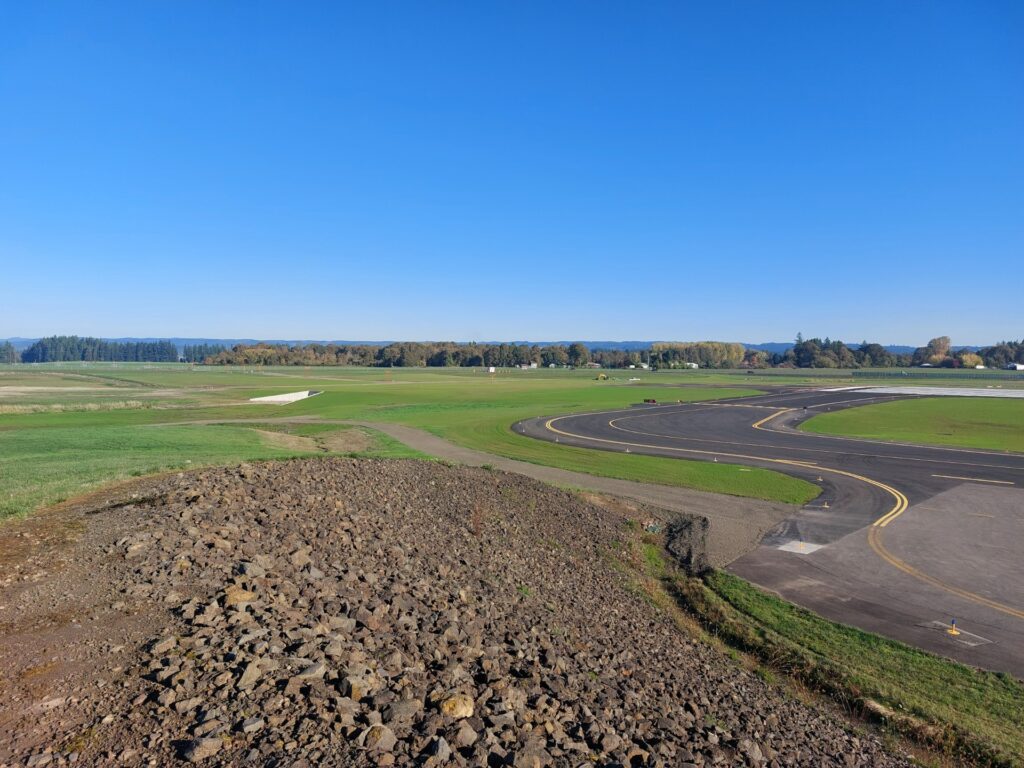
The Hillsboro Airport Runway Safety Area Improvements project addressed drainage conditions that had been present for many years. By relocating the drainage system beneath the RSA, the project removed obstacles from the RSA while maintaining the natural flow of water across the site.
The result is an RSA that meets current standards and supports safer operations at one of the region’s busiest airports.