
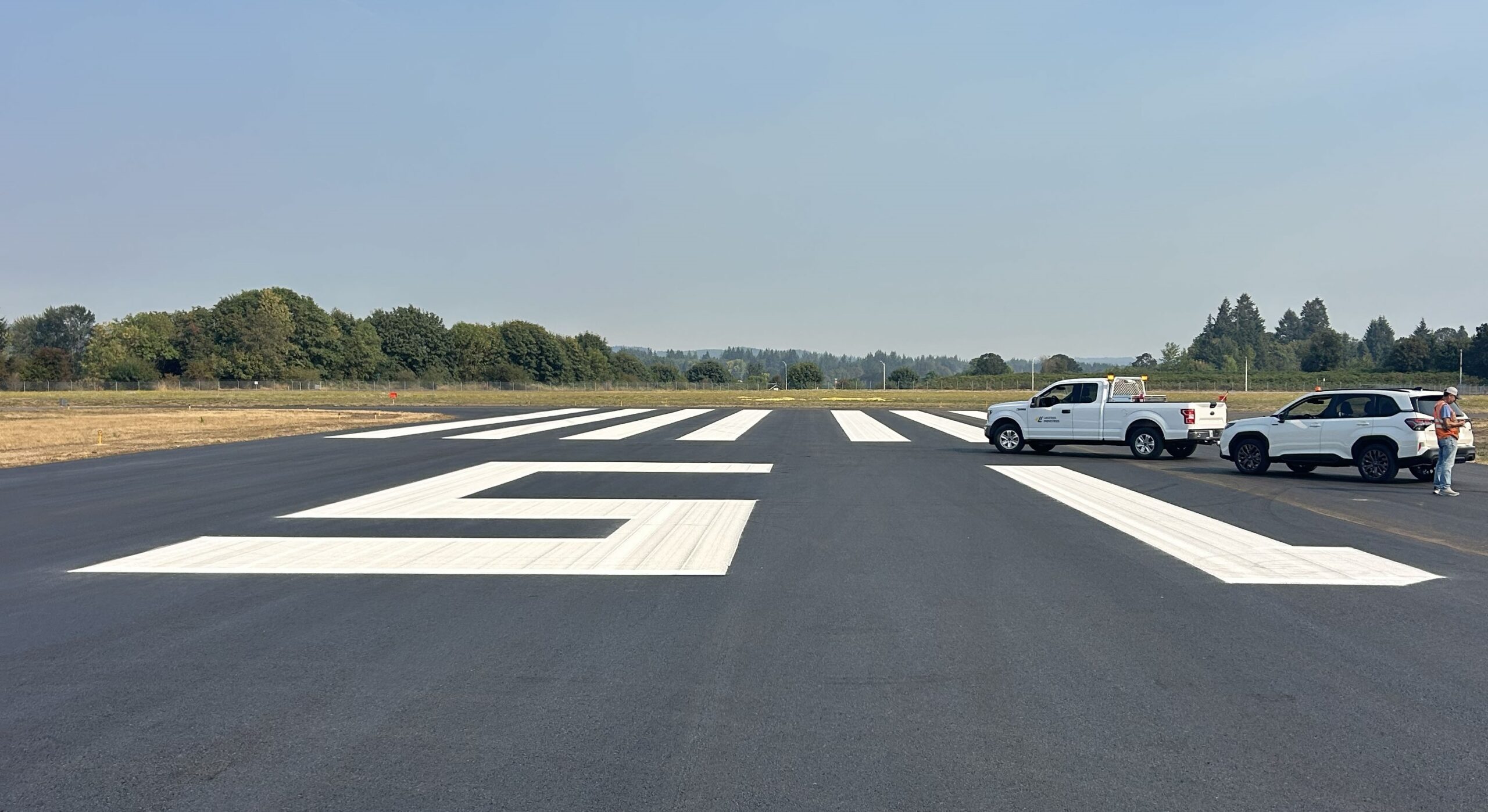
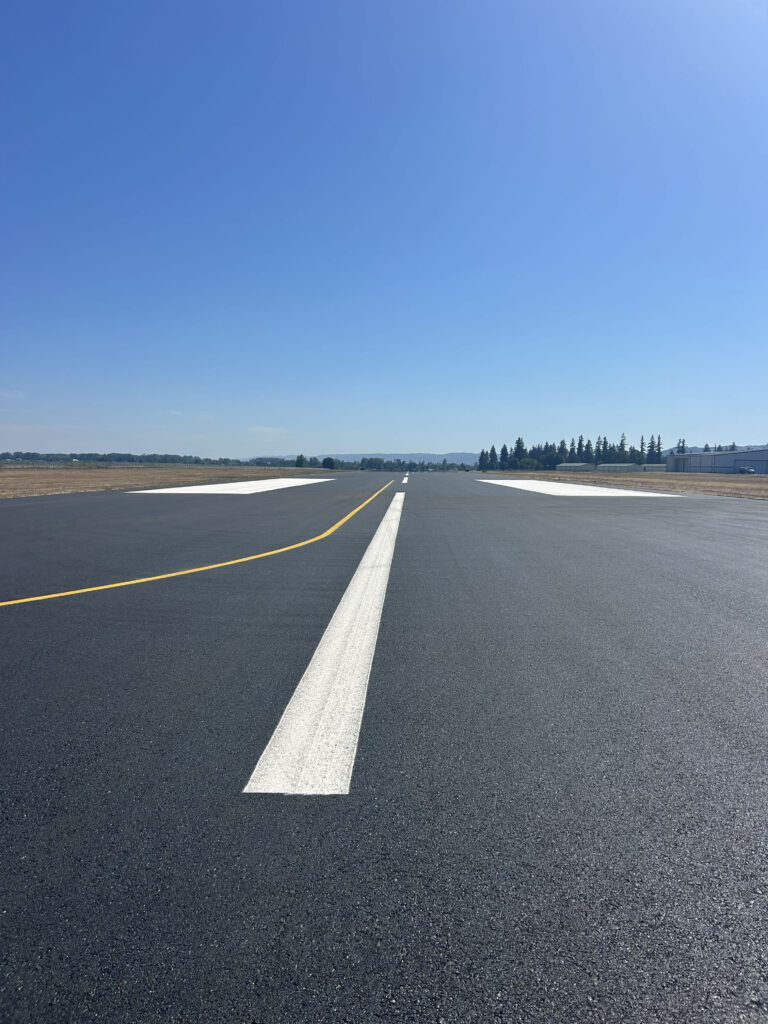
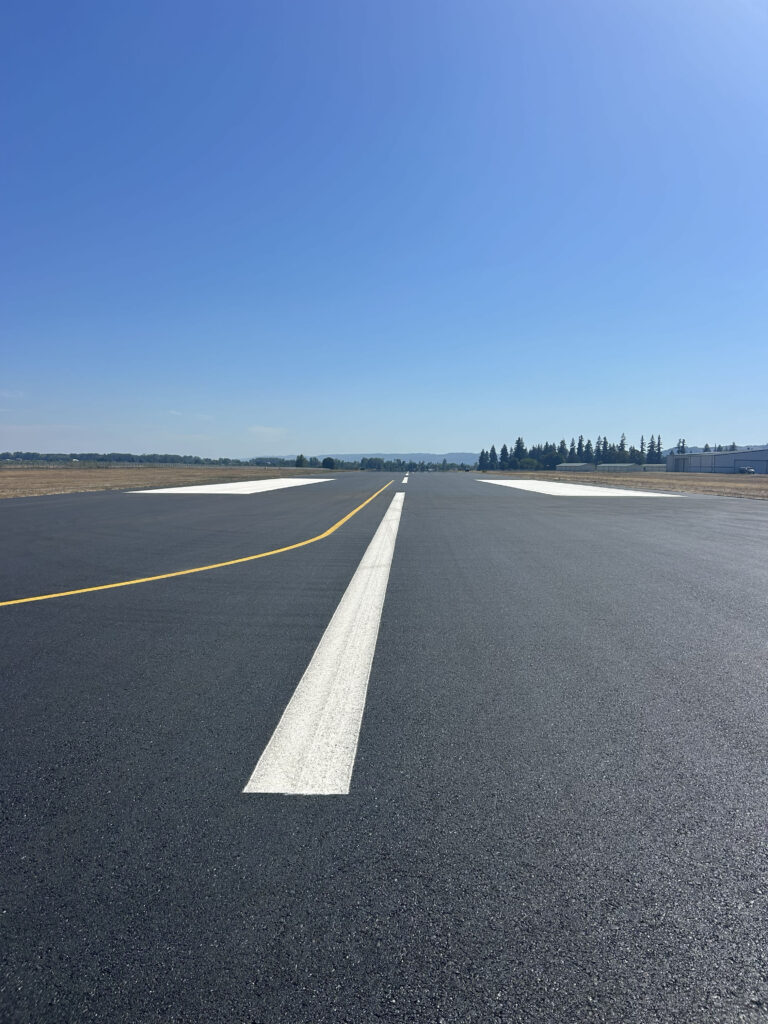
Fresh pavement, new markings, and runway lights that work when they are supposed to. For pilots returning to Scappoose Airport, the finished Runway 15-33 Rehabilitation Project may look relatively straightforward. Behind those improvements are years of investigation, design, coordination, and construction.
Century West has worked with the Port of Columbia County through each phase of the project, beginning with surveys and geotechnical investigations, continuing through design, and now providing construction management as the improvements take shape.
The goal is to restore the runway and its supporting systems to like-new condition to provide a safe, reliable facility for the next 20 years.
Finding the Right Fix
Before deciding how to rehabilitate the runway, the project team needed to understand what was happening below the surface.
Geotechnical investigations included pavement cores to identify the existing layers of asphalt, aggregate, and underlying soil, along with testing using a Falling Weight Deflectometer (FWD). Senior Project Manager Pete Murphy describes the FWD in simpler terms: it essentially “thumps the pavement” and measures how the pavement and soil beneath it respond.
Combined with information about the aircraft using the airport, the testing helped determine how much useful life remained in different portions of the runway.
The results revealed a significant difference. The northern roughly 4,200 feet of Runway 15-33 still had about 20 years of structural life remaining, while the southern 800 feet had only a few years left. Rather than reconstructing the entire runway, the team developed an approach tailored to the conditions beneath each section.
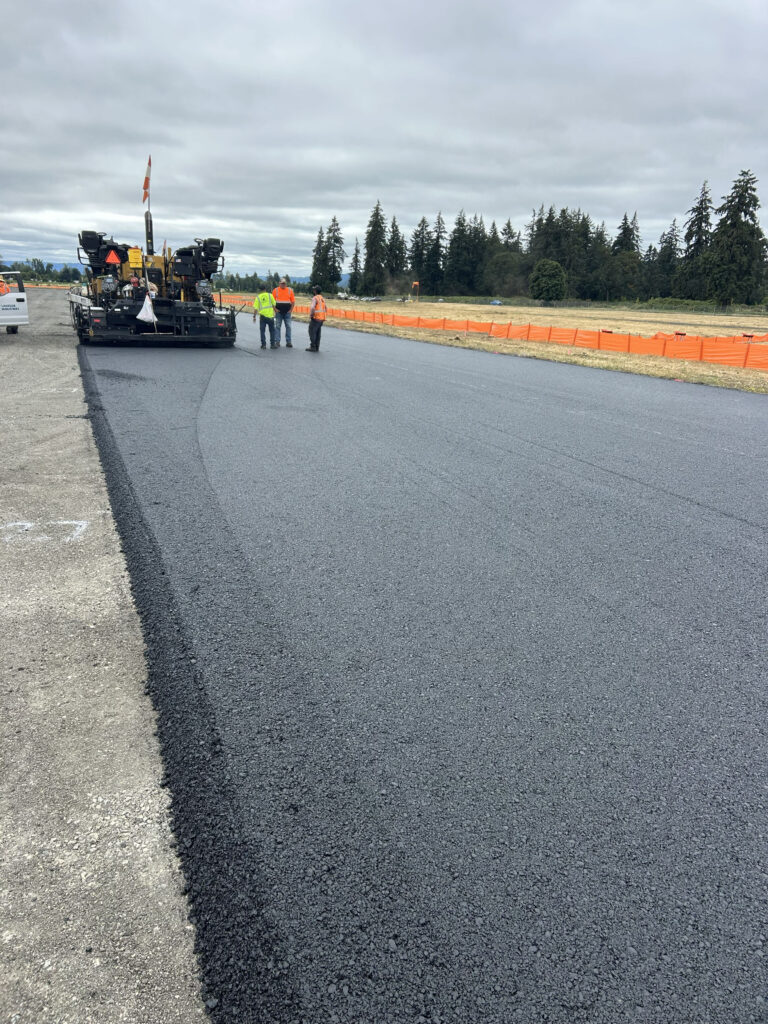
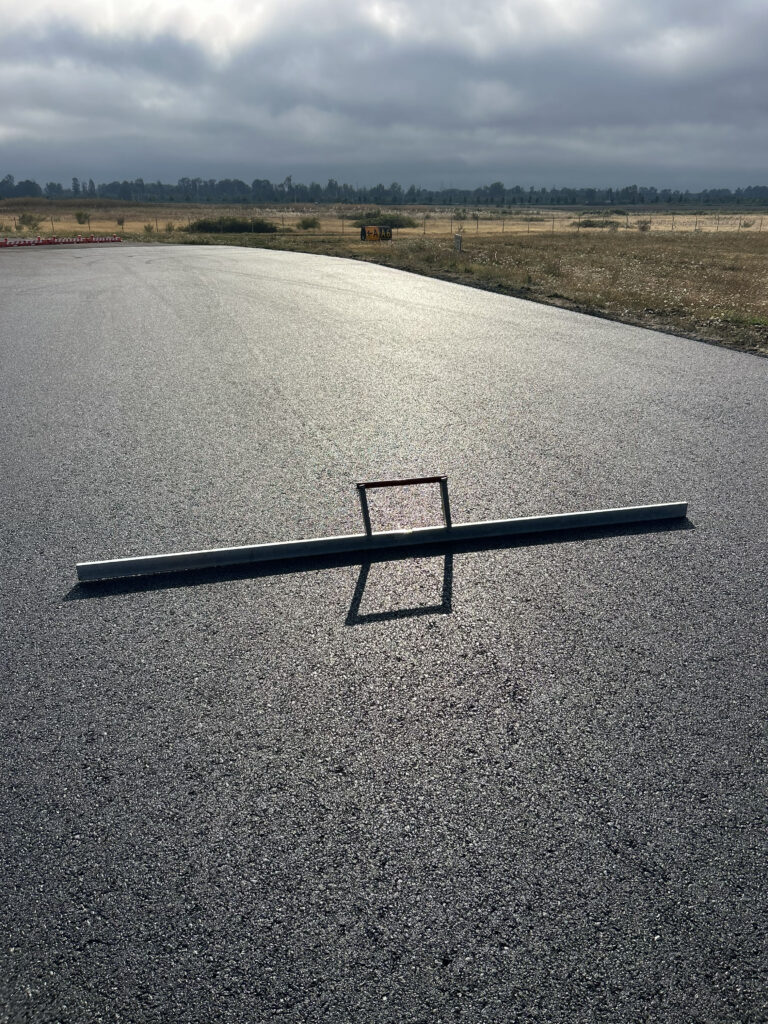
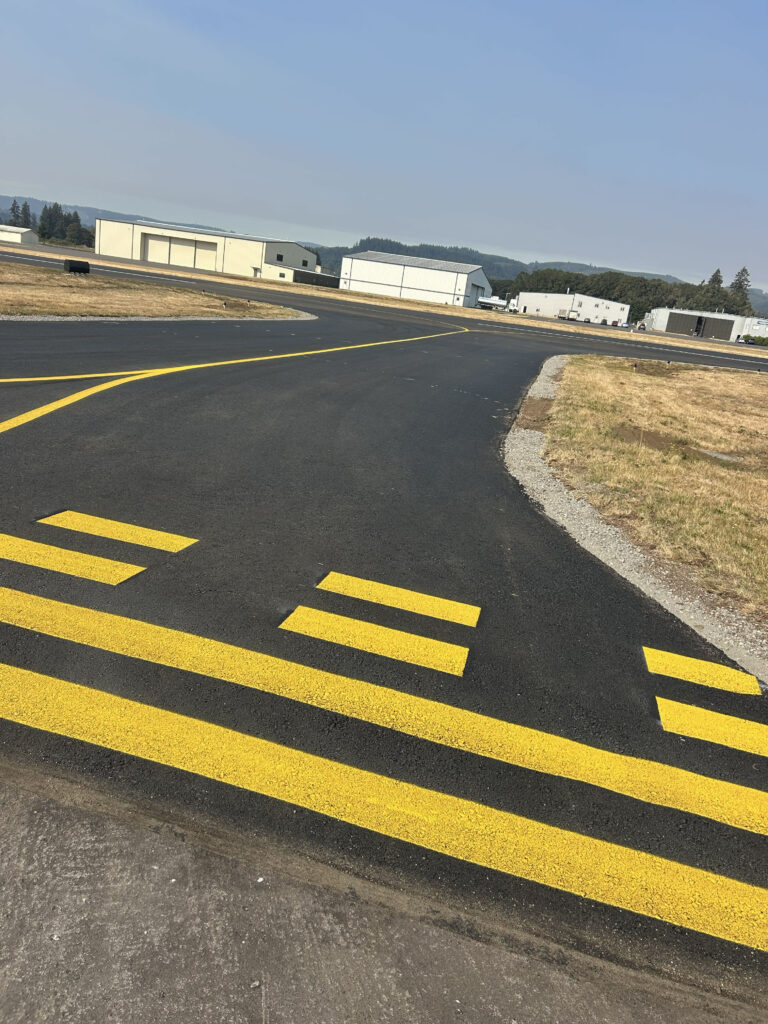
The northern portion was milled 3 inches and received 3 inches of new asphalt, with some grade correction. The southern 800 feet, along with several taxiway connectors, required full reconstruction down to the native soil before being rebuilt with new aggregate base and asphalt.
Discovering What Was Below
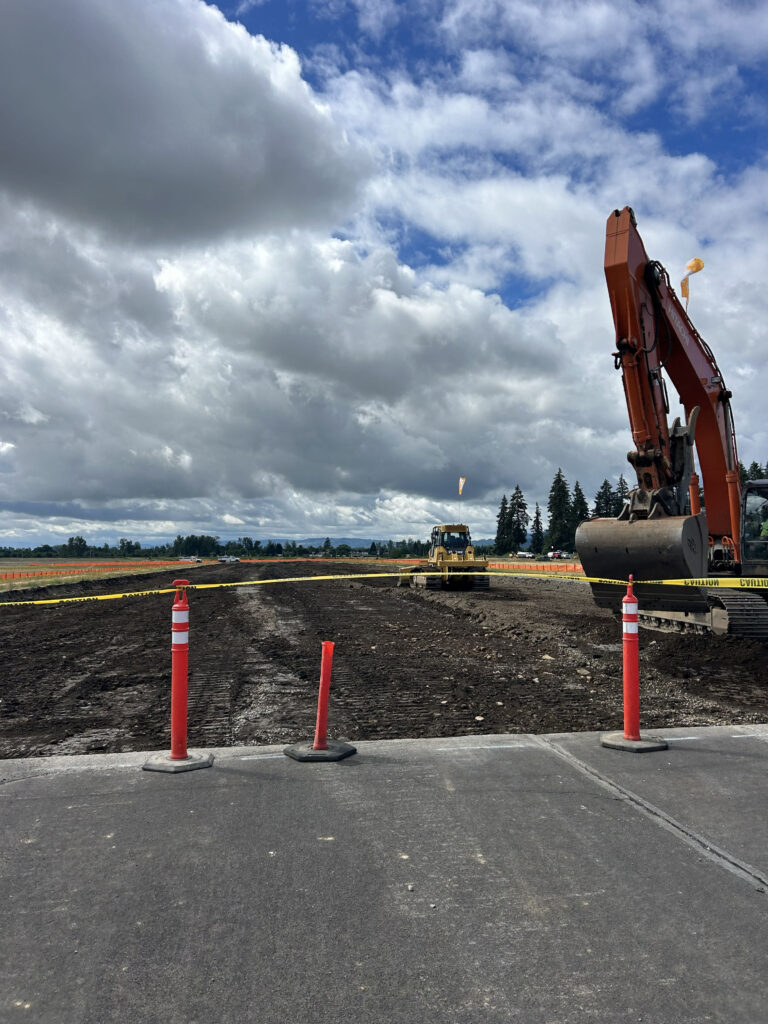
Once construction reached the southern end of the runway, crews got a closer look at some of the conditions contributing to its deterioration.
After excavating to the native soil, they encountered large pieces of rubble, some approximately 9 to 12 inches, that had to be removed and reworked to create a suitable surface. Crews also found areas of soft clay that would not compact.
“When the trucks rolled over them, it just sunk,” Pete said.
Those areas required additional excavation. Crews dug approximately 18 inches deeper and placed larger rock to stabilize the areas before rebuilding and recompacting the pavement foundation.
“That’s part of the reason why it was failing,” Pete explained. The work gave the team an opportunity to address those underlying conditions before placing the new pavement, helping provide a stronger foundation for the reconstructed sections of runway.
Upgrades Beyond the Pavement
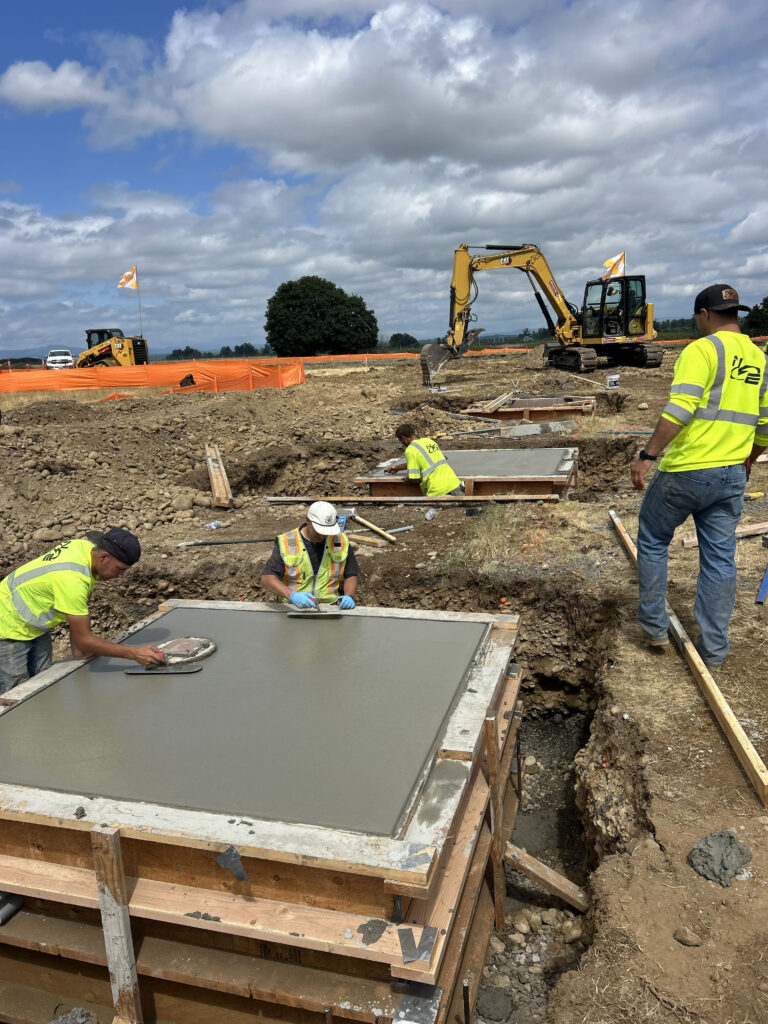
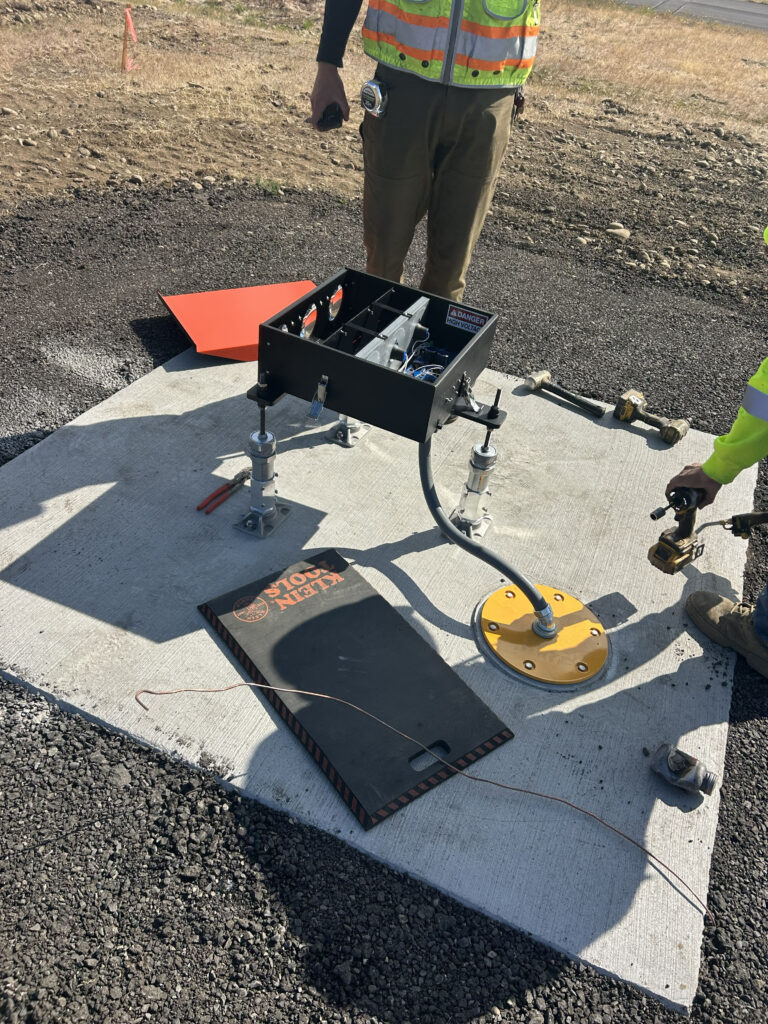
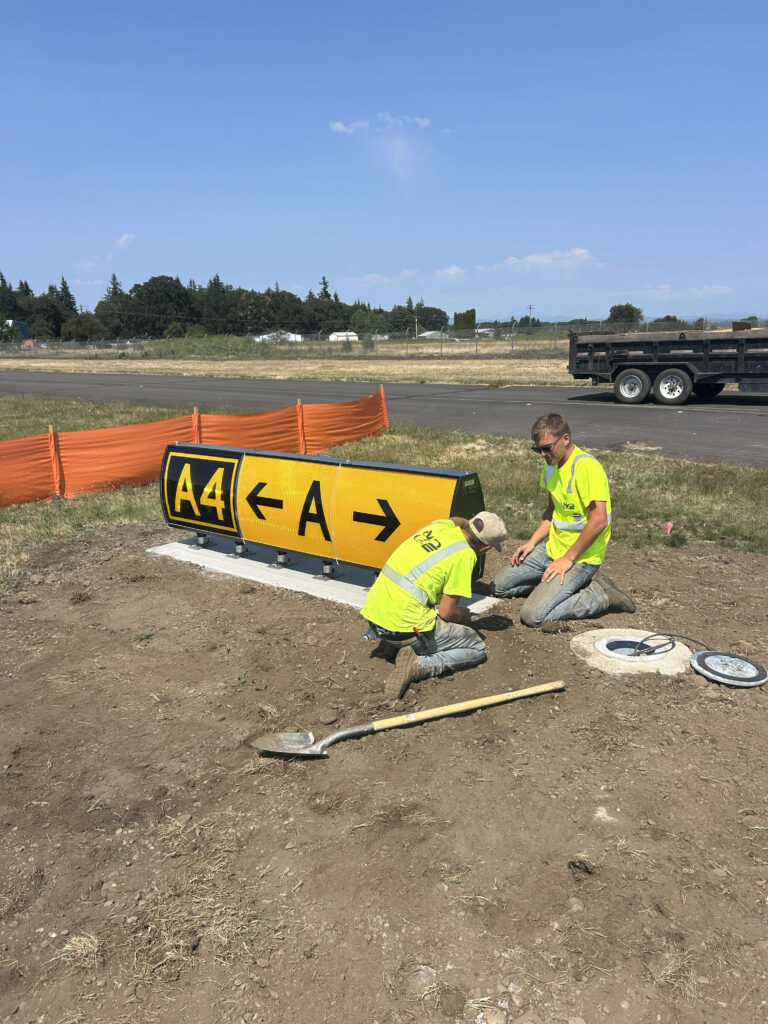
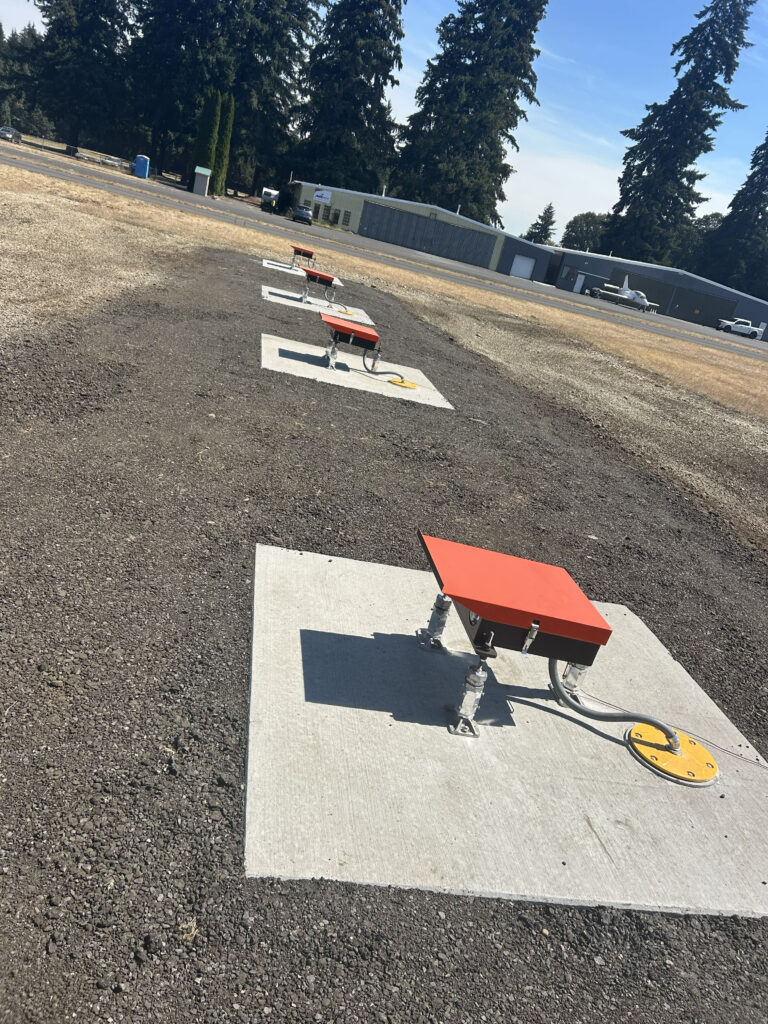
The project also replaces the airport’s existing incandescent runway lighting with LED fixtures, including new PAPIs and REILs, along with upgrades to equipment in the airport’s electrical building.
The new LEDs provide energy savings while simplifying the electrical system and reducing maintenance needs, including the frequency of replacing burned-out bulbs.
For airport users, the result should be relatively simple: a runway and lighting system restored to like-new condition and designed to serve the airport for approximately the next 20 years.
Planning Around a Full Runway Closure
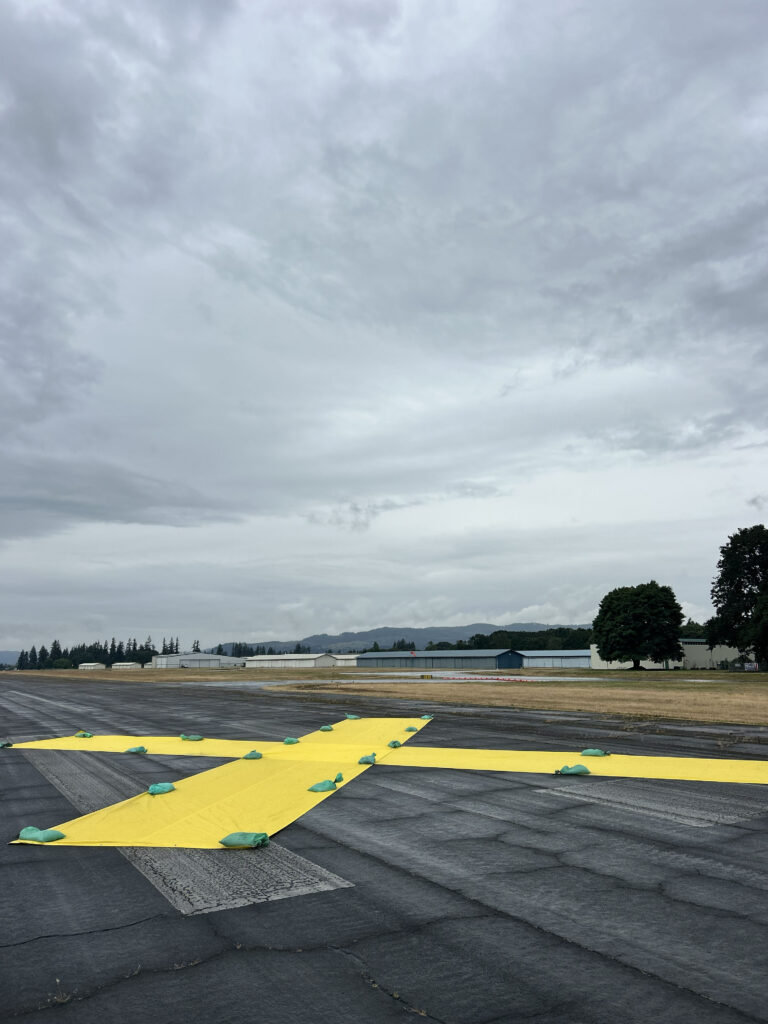
Because Scappoose is a single-runway airport, construction presented another significant challenge. Closing Runway 15-33 meant airport tenants could not simply shift operations to another runway.
Century West and the Port explored alternatives that could reduce the length of the closure, including temporarily shortening the usable runway while work took place at the southern end. Ultimately, the project moved forward with a full closure, making advance communication especially important.
The Port began communicating with tenants well before construction, providing regular updates and hosting a public meeting with Century West to explain the project, schedule, and construction approach. That early coordination gave airport users time to plan for the closure, including temporarily relocating aircraft when necessary.
Seeing It Come Together
Pete points to keeping construction on schedule as one of the team’s biggest successes, which was particularly significant given the unexpected conditions encountered below the runway.
Century West’s construction team, including Pete, Andrew Barker, and Joe Neils, worked together closely throughout the project, with Andrew providing daily field observation and communicating regularly with Pete as issues arose. For Pete, having staff involved in both design and construction is also an opportunity to carry lessons from the field into future projects.
“That’s part of getting young inspectors out on projects to see the projects, be a part of the design portion of it, and then see it built,” Pete said. “Making your next product better based on your experience in the field.”
After years of investigation, design, coordination, and construction, Pete’s favorite part is much simpler.
“There’s nothing better than going out there and seeing black asphalt and grass and the lights working, and knowing, ‘Hey, I was a part of this. My team was a part of this.’ It’s great.”